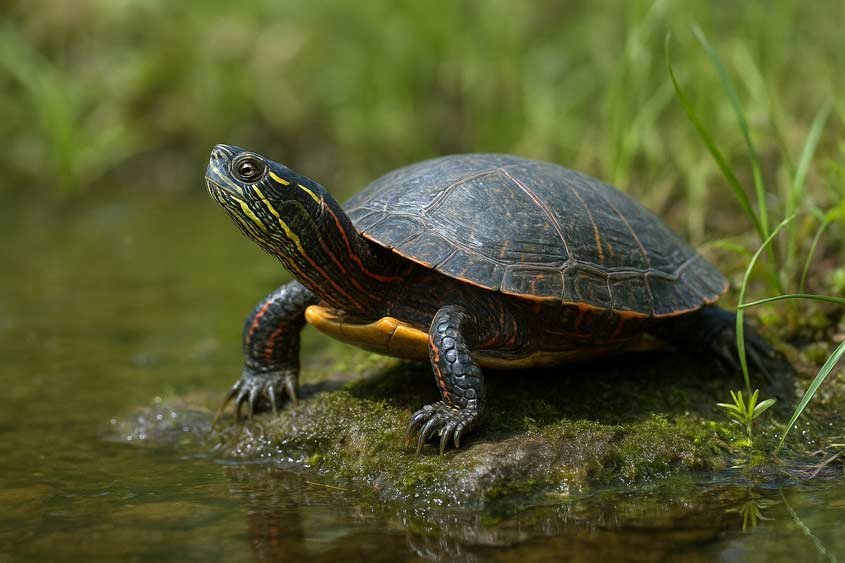
Meeting the Painted Turtle
If you’ve ever wandered along the edge of a quiet pond on a warm summer afternoon, you might’ve seen a little flash of color—red and yellow markings glinting just beneath the surface or on the curve of a sunbaked log. That’s the Painted Turtle, a species that somehow manages to be both humble and striking at the same time. It’s not the largest turtle, or the rarest, or even the most exotic in the grand scheme of the reptile world. But spend a little time watching one, and you start to notice the subtle charm—the way it tilts its head toward the sun like a tiny, armored sunbather, or slips silently into the water the moment you get a step too close.
| TURTLE PROFILE | |
|---|---|
| Turtle | Painted Turtle |
| Binomial Name | Chrysemys picta |
| SCIENTIFIC CLASSIFICATION | |
| Kingdom | Animalia |
| Phylum | Chordata |
| Class | Reptilia |
| Order | Testudines |
| Family | Emydidae |
| Subfamily | Emydinae |
| Genus | Chrysemys |
| Species | C. picta |
| Varieties | Eastern Painted Turtle, Midland Painted Turtle, Western Painted Turtle |
| ENVIRONMENT | |
| Living Environment | Freshwater, semi-aquatic |
| Found in | North America: Canada and northern United States |
| Space Requirement | Minimum 50–75 gallons (190–280 liters) per adult; basking area required |
| Average Lifespan | 20–30 years |
| Exceptional Cases | Up to 40 years |
| Length | 4–10 in (10–25 cm) |
| Weight | 0.5–1.5 kg (1–3 lb) |
| Temperature | 22–28 °C (72–82 °F) in water; basking area 30–32 °C (86–90 °F) |
| pH | 6.5–8.0 |
| PERSONALITY | |
| Temperament | Peaceful, generally non-aggressive |
| Social Behaviour | Can be housed with other Painted Turtles if space allows; may compete for basking spots |
| Diet | Omnivore |
| Food Type | Turtle pellets, aquatic plants, insects, small fish, leafy greens |
| KEY FACTORS AFFECTING LIFESPAN | |
| Enclosure / Tank size | Ample swimming area and basking platform essential; overcrowding can stress turtles and shorten lifespan |
| Habitat / Water quality | Clean, well-filtered water; UVB lighting required for shell and bone health; regular water changes |
| Diet | Balanced omnivorous diet with calcium supplements; poor nutrition leads to shell deformities |
| Companions | Other non-aggressive turtles only; avoid overcrowding and small fish that can be eaten |
| Temperature / Environment stability | Stable water and basking temperatures are critical; sudden fluctuations can cause stress or illness |
| CARE DIFFICULTY | |
| Difficulty Level | Moderate. Requires filtration, UVB lighting, basking areas, and proper diet management. |
| Messiness | Moderate to high. Produces significant waste; regular tank cleaning required. |
| Additional Requirements | – Strong filtration system – UVB lighting and basking lamp – Heated basking area if ambient temperature drops – Substrate and floating platforms – Balanced omnivorous diet with calcium supplementation |
| Special Notes | Painted Turtles are hardy but need proper space and care to thrive long-term; commitment is essential. |
The Painted Turtle (Chrysemys picta) is one of those creatures that feels oddly familiar, even to people who don’t know much about turtles. Maybe it’s because they’re common in so many parts of North America, from slow-moving rivers in the Midwest to marshy ponds in the Northeast. Or maybe it’s that they carry a kind of timeless calm, the same way old oak trees or smooth river stones do—always there, quietly going about their business while the rest of the world rushes past.
Table of Contents
I’ve had my share of encounters with Painted Turtles, both in the wild and in home aquariums, and I’ll be honest—they can surprise you. Sure, at first glance, they seem like laid-back little sun-seekers. But spend a season watching them and you’ll see the subtle rhythms of their lives: how they adjust their basking spots with the changing light, how their appetite shifts when the air turns crisp, and how they interact with the other characters in their watery neighborhood—bullfrogs, minnows, the occasional curious heron.
And yet, for all their familiarity, there’s still a lot most people don’t know about them. How long can they really hold their breath under ice? Why do they have such vibrant markings if they spend most of their time in murky water? And what does it take to give them a good life in captivity without robbing them of their natural instincts?
We’re going to dig into all of it—the Painted Turtle’s world, its habits, its care in captivity, and the little quirks that make it stand out from the other shelled residents of our lakes and rivers. Whether you’re a seasoned turtle keeper, a casual nature enthusiast, or just someone who stumbled across one on a weekend hike and got curious, you’ll find plenty here to feed that curiosity.
But first, fair warning: the more you learn about the Painted Turtle, the harder it gets to just walk past one without stopping for a second look.
The World of the Painted Turtle
The Painted Turtle doesn’t just live in its habitat—it’s woven into it, like a thread in a larger tapestry of pond life. If you know where to look, they’re not hard to find, but there’s a subtlety to spotting them in the wild. They’ve mastered the art of blending in, except for those sudden flashes of red and yellow that give them away.
Natural Range and Habitat
Painted Turtles have one of the broadest ranges of any turtle in North America, stretching from the Pacific Coast to the Atlantic, and from the southern United States all the way up into parts of Canada. This range alone says a lot about their adaptability. You can find them in small farm ponds, slow rivers, marshes, swamps, and even drainage ditches if the conditions are right.
They’re water lovers through and through, preferring shallow, calm areas with a soft, muddy bottom and plenty of aquatic plants. That mud isn’t just for lounging—it’s their winter survival tool. When the water freezes over, Painted Turtles settle into that silty bottom and enter a slowed-down state, their bodies functioning on the barest flicker of oxygen. Imagine holding your breath for months at a time—well, they don’t quite do that, but it’s not far off.
And here’s a little secret about finding them: sunny logs and rocks near the water’s edge are like prime real estate. If you see one turtle basking, there’s a good chance a whole group isn’t far behind. They’re not exactly shy about crowding together if the spot’s good enough.
Physical Appearance and Variations
If you’ve ever wondered why they’re called “Painted” Turtles, just look at them in the right light. The shell, or carapace, is smooth and dark—sometimes greenish, sometimes more brown—but along the edges, bright red and yellow streaks flare like brushstrokes on a black canvas. Their legs and neck are striped with yellow, and their plastron (the belly side of the shell) has its own unique splash of color, often a rich yellow with darker markings.
Interestingly, there are four recognized subspecies—the Eastern, Midland, Western, and Southern Painted Turtles—and while they’re all similar, subtle differences in markings, size, and plastron patterns can give away which you’re looking at. Spotting those differences is a bit like birdwatching: the more you do it, the more your eye picks up on.
Most Painted Turtles stay in the modest range of 4 to 10 inches in shell length, with females typically a bit larger than males. That size makes them big enough to be noticed but small enough to remain nimble in the water.
Behavior in the Wild
Spend a warm morning near a pond and you’ll notice something about Painted Turtles—they are expert sunbathers. Basking is more than just relaxation; it’s essential for their health. The sunlight warms their bodies, boosts their metabolism, and helps them produce vitamin D3, which keeps their shells and bones strong. They’re also quick to retreat at the first sign of danger, slipping into the water with barely a ripple.
But don’t mistake caution for antisocial behavior. Painted Turtles often bask in groups, stacked like little armored pancakes, each jockeying for the best position. In the water, they’re surprisingly graceful swimmers, gliding between plants and darting after bits of food.
There’s also a certain rhythm to their year. In spring and summer, they’re most active—feeding, basking, mating. By late fall, activity slows, and they prepare for that incredible overwintering feat in the mud. This seasonal cycle is so dependable that if you track a single pond for a year, you can almost set your calendar by them.
Diet and Lifestyle of the Painted Turtle
If you’ve ever watched a Painted Turtle forage, you know they don’t exactly hunt like predators on the prowl. There’s a calm, almost casual quality to it—gliding through the water, poking their head into weeds, taking little exploratory bites. They’re opportunists, not fussy eaters, which is probably one of the reasons they’ve managed to thrive across such a wide range.
Feeding Habits in Nature
In the wild, Painted Turtles eat a mix of plants and animals, leaning toward more protein when they’re younger and more vegetation as they get older. Juveniles are scrappy little carnivores—snapping up insects, worms, small fish, tadpoles, and even carrion if the opportunity presents itself. Adults still enjoy a good meaty snack, but they’ll happily munch on aquatic plants like duckweed, water lilies, and algae.
They don’t chew in the way we think of it—turtles lack teeth. Instead, they use their sharp-edged beaks to tear food into pieces small enough to swallow. I’ve seen them grab a wriggling insect, give it a quick shake, and gulp it down whole in a matter of seconds. It’s efficient, if not particularly elegant.
Another thing: Painted Turtles feed mostly in the water. They need to be submerged to swallow properly, which is why you won’t catch them munching away on a log like a squirrel with a nut.
Seasonal Changes and Activity Patterns
Their diet and activity level shift with the seasons. In the warmth of spring and summer, they’re active grazers, feeding frequently to build up energy reserves. Come fall, as water temperatures drop, their metabolism slows, and so does their appetite. By winter, they’re tucked into the mud, living off stored energy and absorbing oxygen through specialized tissues in their throat and cloaca.
This ability to essentially “breathe” through their skin underwater during hibernation is one of those weird turtle superpowers that never fails to amaze me. Imagine spending months under a frozen pond without once breaking the surface for air—it’s survival by patience.
Interaction with Other Wildlife
Painted Turtles are part of a larger ecosystem, and their relationships with other creatures can be both cooperative and competitive. They share their habitat with frogs, fish, snakes, birds, and sometimes other turtle species like snapping turtles or map turtles.
I’ve watched them bask alongside frogs in what seems like a peaceful truce, but drop a morsel of food into the water and suddenly the mood changes—everyone’s darting for the prize, and a Painted Turtle’s quick neck strike can be surprisingly competitive.
They also play a role in keeping waterways clean, scavenging on dead fish and other organic debris. In that sense, they’re part gardener, part janitor of their little aquatic world.
Caring for a Painted Turtle in Captivity
Keeping a Painted Turtle isn’t like tossing a goldfish in a bowl and calling it a day. They’re active, intelligent reptiles with specific needs, and if you cut corners, it shows—in their shell, in their behavior, even in their lifespan. A healthy Painted Turtle in good care can live decades, so you’re not just taking on a pet; you’re committing to a long-term relationship with a little piece of wild nature.
Setting Up the Perfect Habitat
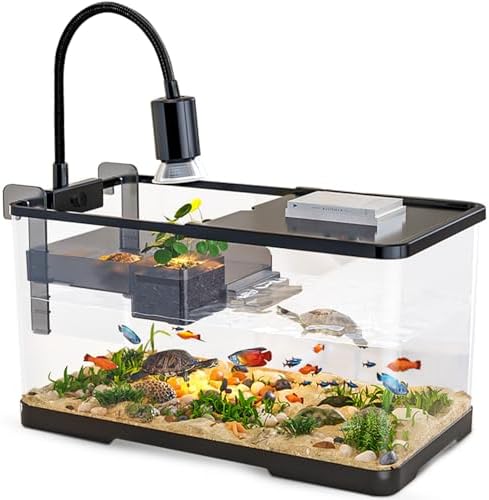
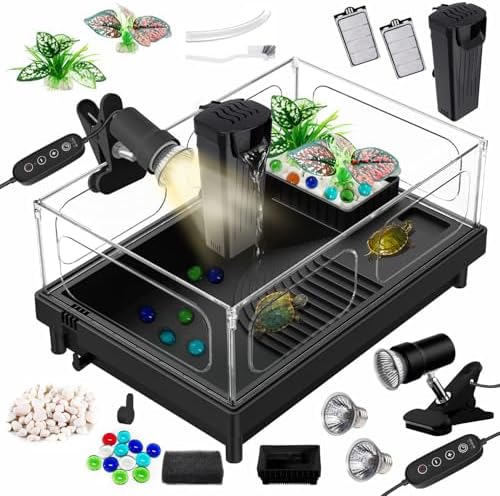
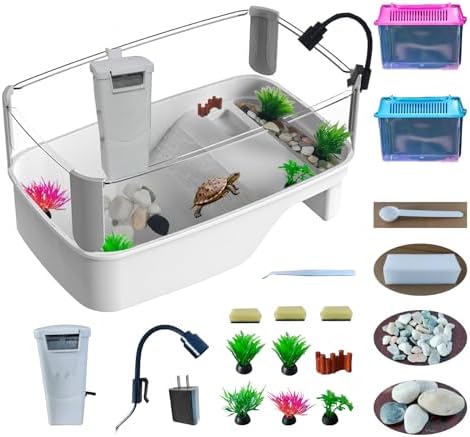
First thing’s first: space. A small aquarium might work for a hatchling, but they grow fast, and an adult Painted Turtle needs room to swim, bask, and explore. For a single adult, think at least a 75-gallon tank or larger. Outdoor ponds are even better if your climate allows—they mimic natural conditions and give the turtle the freedom to follow its instincts.
Water quality is non-negotiable. A strong filtration system is a must because turtles are messy eaters and frequent poopers. Without it, you’ll be dealing with cloudy water and bacteria in no time. I’ve always been partial to canister filters—quiet, efficient, and easy to hide.
Then there’s the basking area. Painted Turtles need a dry, warm spot where they can haul out completely and soak up UVB light. Without UVB, they can’t synthesize vitamin D3 properly, and that leads to weak bones and shell deformities. A good setup includes both a heat lamp (around 85–90°F at the basking spot) and a UVB bulb.
Don’t forget depth—these turtles are strong swimmers. Give them deep enough water to dive and glide, but also sloped areas or platforms where they can easily rest without struggling. Add some aquatic plants (real or artificial) for hiding spots, and you’ve got the start of a home they can actually thrive in.
Feeding and Nutrition in Captivity
In captivity, variety is key. Painted Turtles do well on a mix of commercial turtle pellets, fresh vegetables (like romaine lettuce, dandelion greens, and shredded carrots), and occasional protein treats—earthworms, feeder fish, or freeze-dried shrimp. Younger turtles need more protein, while adults should lean more toward plants to prevent obesity.
One trick I’ve picked up: feed them in a separate container of water. It keeps their main tank cleaner and lets you monitor exactly what they’re eating. And yes, they can be picky. I’ve had turtles turn their noses up at certain greens for weeks, only to suddenly decide they’re irresistible.
Calcium supplementation is worth considering, especially for growing juveniles and breeding females. A simple cuttlebone in the tank can help keep their beaks trim and their shells strong.
Common Health Concerns and Prevention
Most health issues in captive Painted Turtles boil down to poor husbandry. Soft shell (metabolic bone disease) comes from lack of UVB or calcium. Respiratory infections often trace back to low water temperatures or poor water quality.
A healthy turtle has clear eyes, a firm shell, and a good appetite. If you notice wheezing, swollen eyes, shell pits, or unusual lethargy, it’s time to call a reptile vet. And yes—find a reptile vet before you actually need one. Not all veterinarians are equipped to handle turtles, and waiting until it’s urgent can cost precious time.
Regular cleaning, proper lighting, stable temperatures, and a balanced diet will prevent 90% of problems before they start. In my experience, a turtle that basks regularly, eats eagerly, and swims with energy is a turtle you’re doing right by.
Conclusion
The Painted Turtle might not have the star power of a rare sea turtle or the brute mystique of a snapping turtle, but it has something better—staying power. It’s a creature that’s been quietly thriving in ponds and slow rivers for millions of years, adapting to climates from the deep South to the Canadian wilderness. There’s a certain comfort in that kind of persistence.
Whether you meet one sunning itself on a log in late spring or watch it glide lazily through the water of your backyard pond, the Painted Turtle has a way of pulling you into its pace. It’s not in a hurry, it’s not trying to impress—yet it’s impossible not to admire. Those red and yellow markings, the deliberate movements, the way they vanish underwater like they’ve never been there—it all feels like part of a secret world that’s been running alongside ours the whole time.
For those who keep them in captivity, the challenge and reward lie in giving them a life that’s as close to the wild as possible. Plenty of space, clean water, basking light, and the chance to express those natural behaviors. Do that, and they’ll return the favor with decades of quiet companionship.
I’ve often thought that Painted Turtles teach a kind of patience we don’t practice enough. They remind us that life doesn’t have to be a sprint—it can be a slow swim, a stretch under the sun, or just sitting still while the seasons change around you.
And maybe that’s the real reason they’ve endured for so long. Not because they’re the fastest, strongest, or flashiest, but because they’ve mastered the art of simply being where they are, doing what they do best. If that’s not worth knowing—and appreciating—I don’t know what is.
Best Seller Products On Amazon*